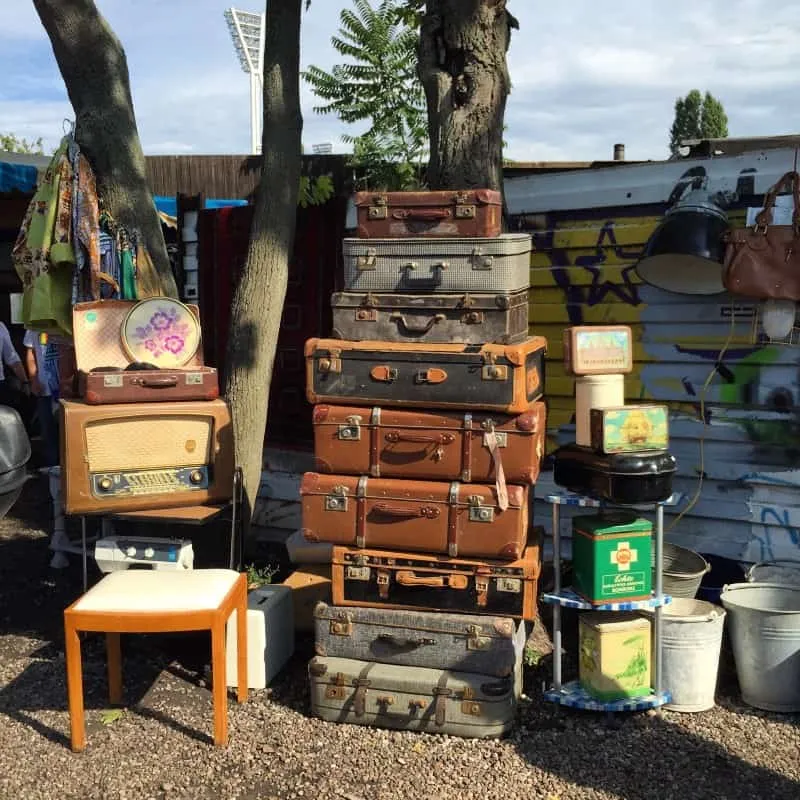
My sister Begüm is a Berliner now. Last week she was in Istanbul for a few days. My longing for her mingled with a longing for civilisation, and one thing led to another.
Begüm was thinking of selling the sofa at home and buying a new one. Who would take your sofa, I said. Here a junk dealer would not give three kuruş for it. When she told me how far the culture of second-hand things has gone in Germany, I was astonished. She talked at length about people selling even a single spoon that has not lived out its life, about wasting nothing, about this being a way of living. I listened in surprise: almost everyone, whatever their income, furnishes a home with second-hand things, and anything that still does its job is never taken out of circulation. For years I had watched foreign friends stand in wonder and admiration before the greengrocers and the watermelon sellers, and I had told them with pride that here a watermelon is sold whole, cut for you, not by the slice. At the time I put this down to abundance, not to waste. I was thirty-six, listening to Berlin, when I first learned of a flawless system in which everyone buys only as much as they will eat, earns every kuruş by working for it in full, expects that worth back in full, and never wastes the fruit of their labour. There is a material return for the country, and a moral one, even in notes that turn up on the mailing lists Begüm belongs to: "I have cooked one portion too many, does anyone want it?", "one of these two avocados looks spare".
Germany, with a gross domestic product of 3.9 trillion dollars, is the fourth largest economy in the world. Türkiye stands eighteenth on the same list, with a GDP of 799.5 billion dollars, one fifth the size of Germany. So whatever any one of us may earn, the country does not in fact have the money to throw old things away and buy new ones, or to take up every new model of phone that appears. The artificial plenty we live in, the prodigality even, is not wealth. It is poverty, and in part a mark of coarseness. We are probably trying to savour the moment, on the saying that once the fish has sunk, the pan may go too. All of us are spending, at best, the money of a few months from now, and more often the money of years ahead.
On my last trip to Germany a shopkeeper in a small town asked, "I hear that in Türkiye there is such a thing as paying a credit card in instalments. Is that true?" He was waiting for me to tell him it was a myth, and he was very surprised when I confirmed it. The opium of a system that has already indebted the Greek babies born today for the next thirty years is, I suppose, this instalment mechanism as well.
While I turned all this over, the streets of Moda met me with perfectly sound cupboards thrown out as rubbish.
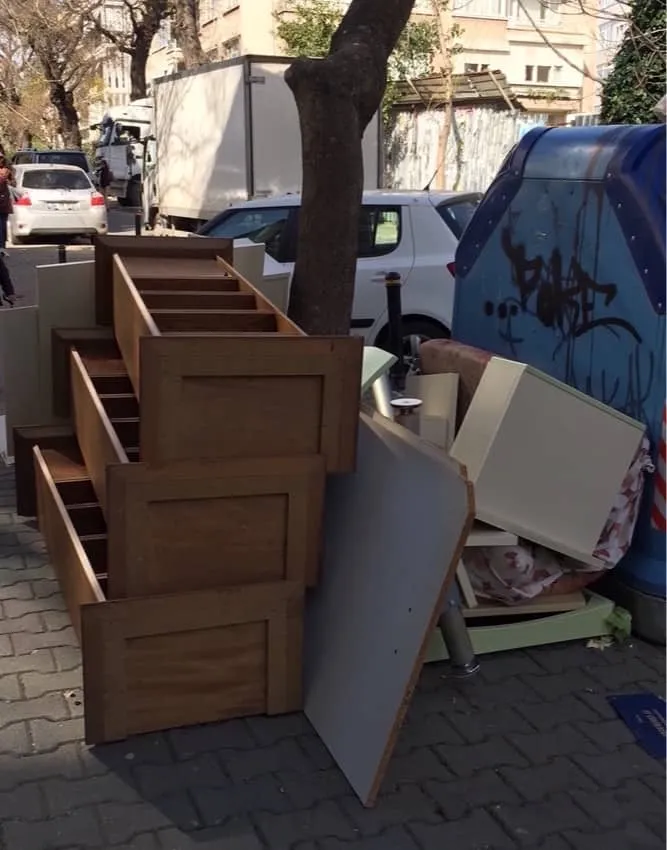
Again, and as always, I say it: what a strange one you are, my Türkiye.