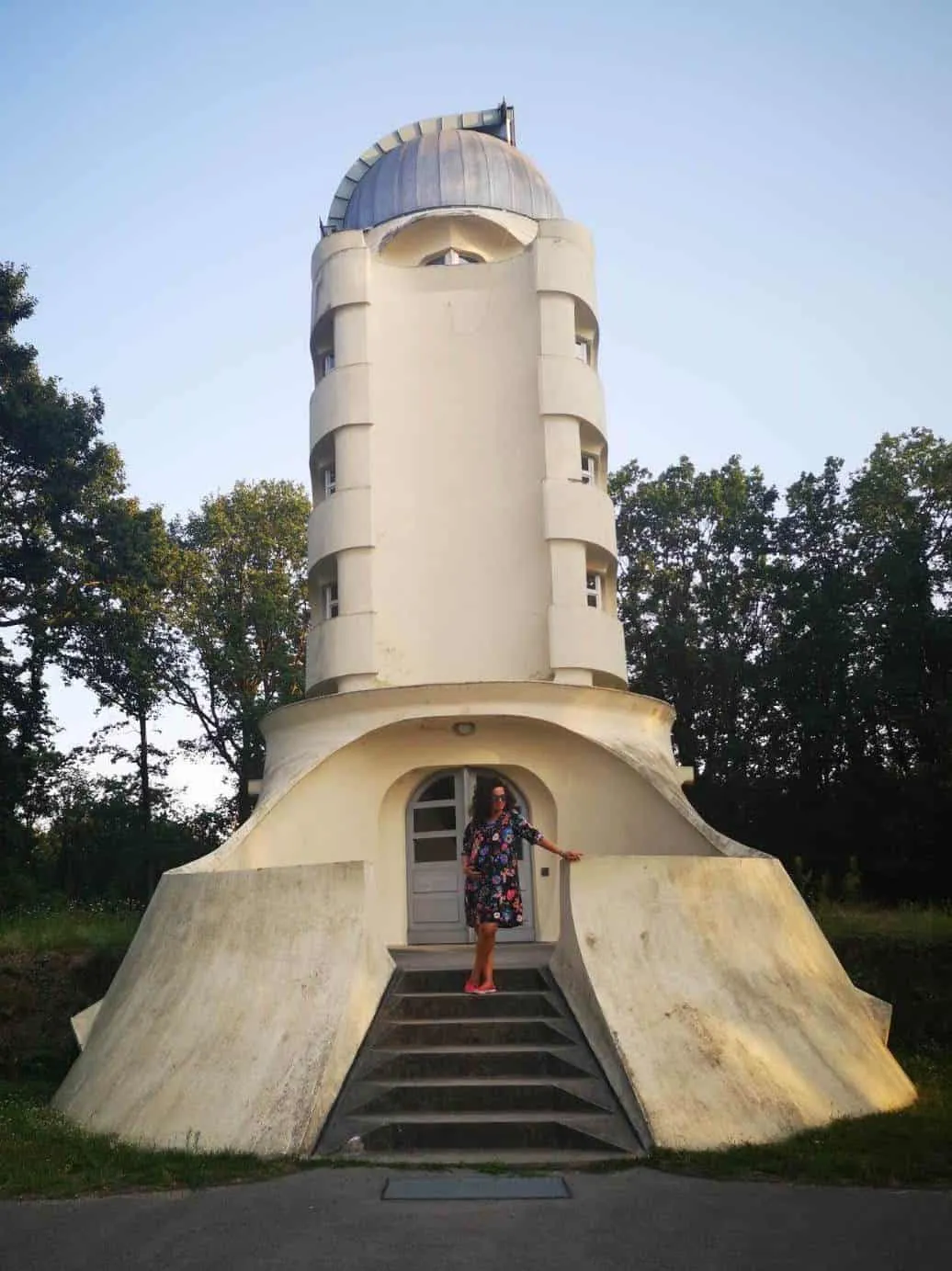
The summer of 2019, looked at from today, lies almost a light year away. It was a very hot summer, in which I sensed deep down that I was at a turning point in my life, and in which, with a sagacity whose virtue I had conferred on myself, I preferred to stay indifferent to that feeling. I was 40, about eight months pregnant, and I had gone alone to Berlin to be with my sibling. Europe, and Germany in particular, was scorching, and I, against all of these conditions, was inexplicably full of energy. Wanting to read, to wander, to see and to be on the move, I decided, in that state, to go and see the important buildings I wanted to see in Berlin and around it, paying no attention to eyes that were astonished and at times anxious. I met the Einstein Tower in exactly that frame of mind, on an afternoon just beginning to cool, after a day spent walking the Baroque gardens of Sanssouci Palace in the heat that had scorched me since morning. I leave this opening here, personal to an unusual degree and quite long for a text of impressions about a building, thinking it may be a clue to the effect the building had on me. I believe that this small building, stamped on our minds by phrases reproduced from the generic photographs of architectural history, the icon of German Expressionism, Erich Mendelsohn's masterpiece, gains meaning, like every good work of architecture, only when it is experienced, and that the experience is shaped by a quite personal chain of events.
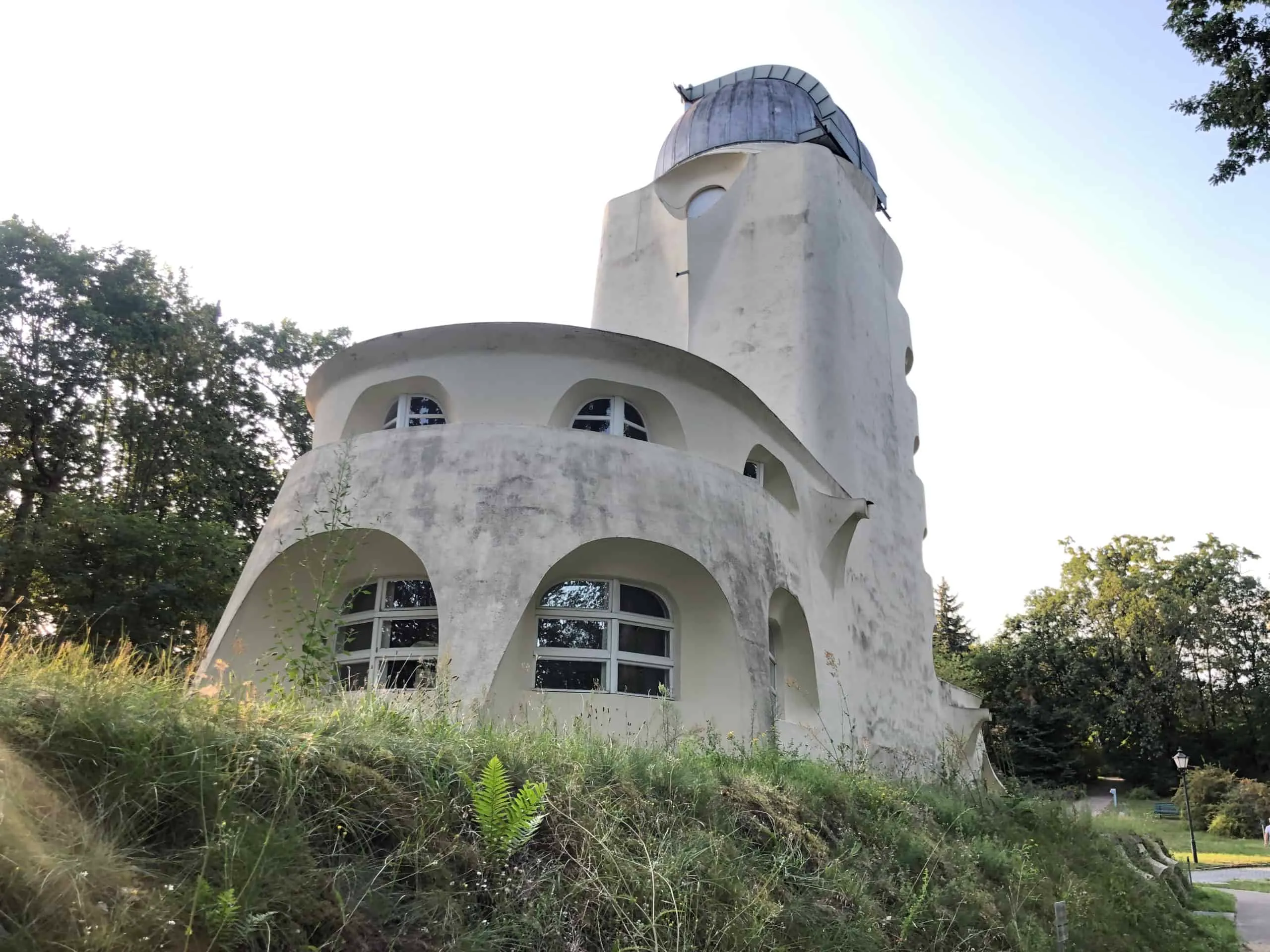
It would not be wrong to say that the Einstein Tower, designed by Erich Mendelsohn, really is one of the most important examples of German Expressionist architecture to have reached us. This small observatory, where as you approach you realise that the word tower is an exaggeration, stands in Potsdam, inside the Albert Einstein Science Park, which belongs to the Leibniz Institute for Astrophysics. The institute is among the most important institutions in the world set up to study the origin, the constituents and the fate of the universe. In this park, laid out in the middle of the 19th century, long-established institutions, among them an institute for research on the seas and an institute for climate research, as well as observatories used for various astronomical, meteorological and geological purposes, still host nearly a thousand researchers. The best-known building in the park is without doubt the Einstein Tower, designed in 1921, on the initiative of Einstein's assistant Erwin Finlay-Freundlich, with the aim of proving Einstein's theory of relativity.
On a pleasant summer afternoon, walking around the Einstein Tower, which still carries out its function without a flaw, it is impossible not to be caught by the building's aura. One cannot help being grateful that the astrophysicist Freundlich chose a young and brilliant architect to design the shell of the system he devised in order to prove that the spectral lines of the sun shift towards the red, and therefore that the universe really does expand, as Einstein proposed. Life likes coincidences. Freundlich, a brilliant scientist who played the cello, was originally a friend of Luise Maas, Mendelsohn's wife and herself a famous cellist. In the ways architects come by their work, the past century does not seem to have changed very much.
He had finished university with honours, kept an office of his own in Munich for only two years, then gone to the front and only just returned from the war. For a young architect in that position, idealist and in pursuit of form, what must have been extremely exciting was not the programme of the building so much as the concept it stood for. To hold the spirit of the age between the palms of one's hands is granted to very few architects in history. It is a curious thing that a building should seek, through architecture, the representation of a theorem that clarifies the basic principle on which the universe works.
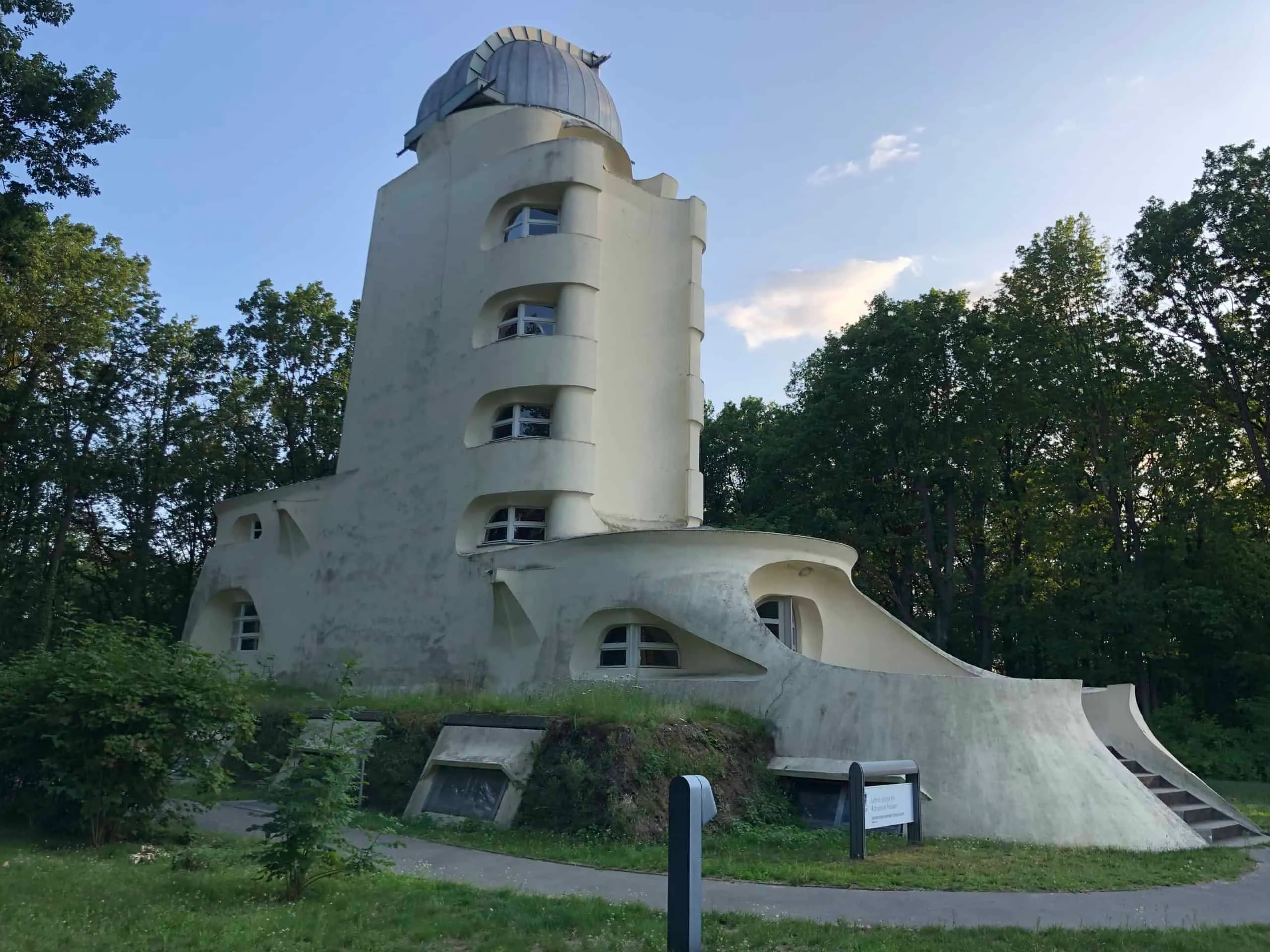
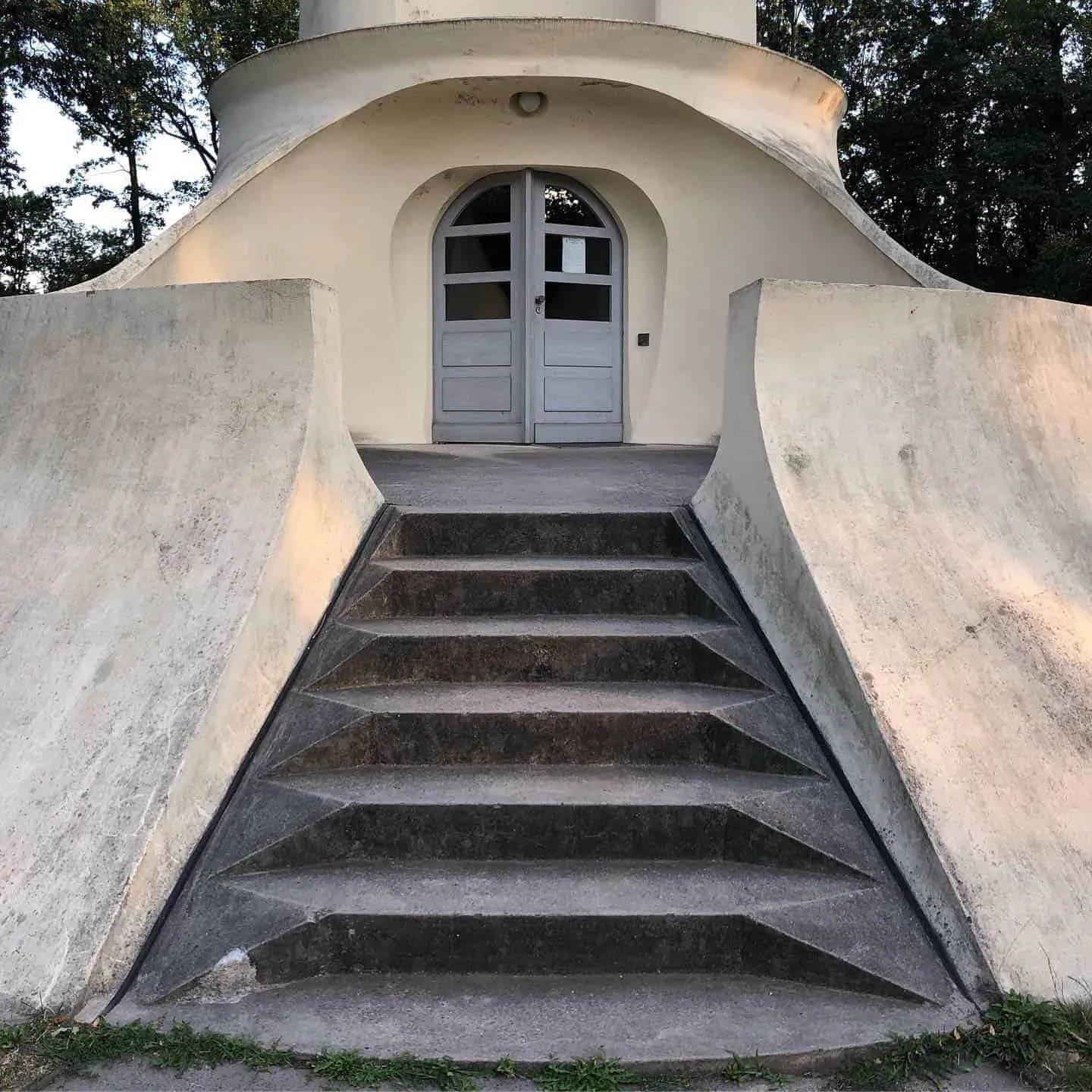
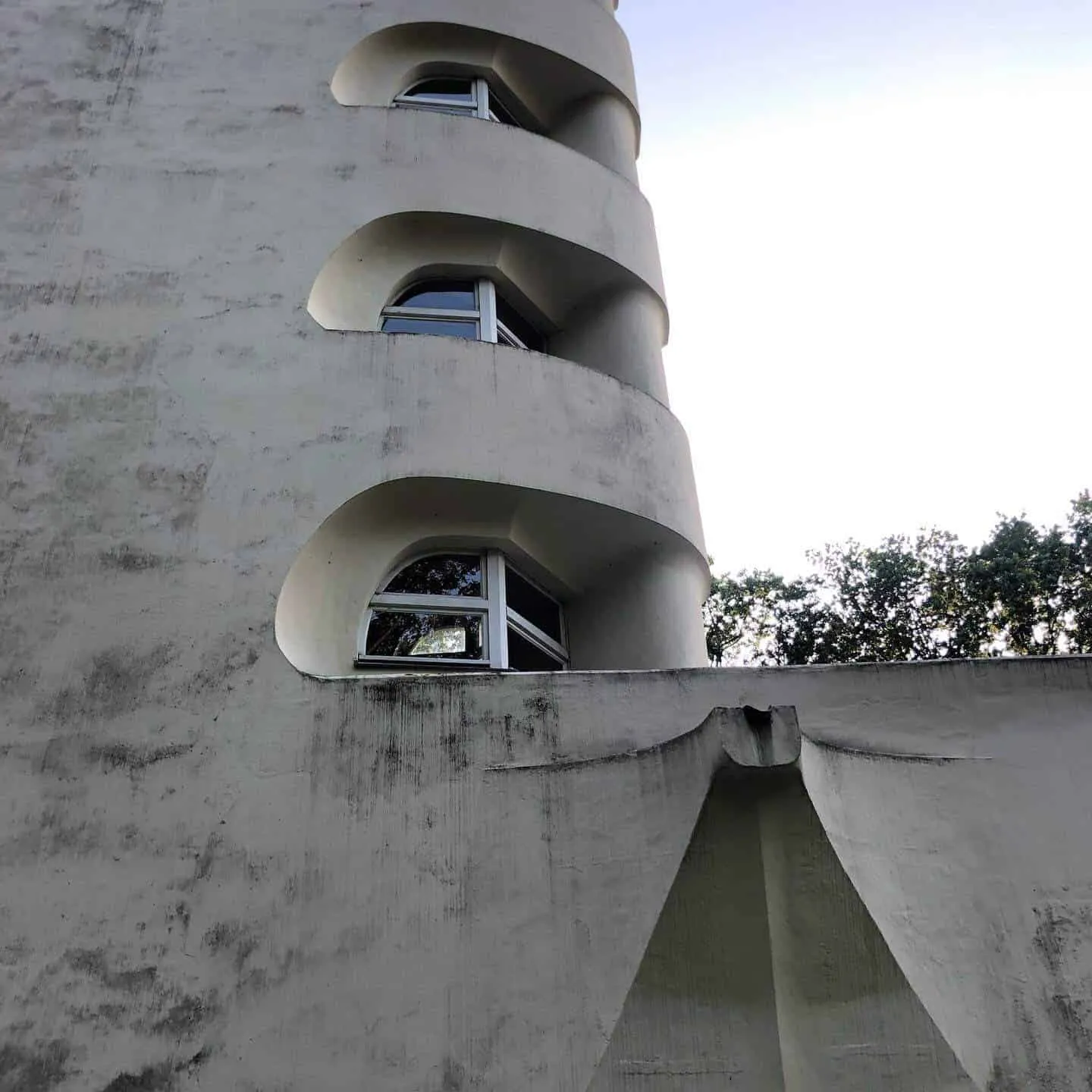
That the form was demanding for the technology of the period brought many physical problems with it. Although the possibilities of reinforced concrete were thought to be the most suitable solution for the sculptural form Mendelsohn had imagined, this was not possible, because of problems of formwork and of execution on site. Apart from the base of the building, reinforced concrete could not be used to achieve the plastic effect that was hoped for. Whenever problems arose during construction, solutions were improvised on the spot, and so the Einstein Tower was completed as a building quite troubled in its building physics. It was last opened again to use, and to visitors, in 1991, after a comprehensive repair, both for the structural problems and for the damage it took in the Second World War.
But what I think really matters is that in 1921 a building of this kind was funded personally, that is by private enterprise, with the support of Albert Einstein, by Salomon and Gustav Herrmann, owners of the Luckenwalde Hat Factory and among Mendelsohn's first clients. Once the architect had completed the drawings, he visited the Herrmanns together with Einstein and Freundlich, explained the theory of relativity, asked for support for the building, and was answered yes. It is said that Einstein stayed silent as he walked through the tower at the opening, and that after a while, as if talking to himself, he said aloud, "organic". A tiny observatory is one of the important examples of the symbolic representation of scientific development through architecture, and it also shows the reach of the intellectual and material solidarity between scientists and society. I walked through it with a sigh, and with envy.
Living in the very middle of a pandemic and counting ourselves luckless, I want to remind you of what Mendelsohn, the architect of the building, and his generation lived through. While Erich Mendelsohn was a young architect fighting on the side of Germany in the First World War, he was making sketches in the line of fire, sketches he did not yet know how to bring into the world. It can even be said that the dynamic, plastic effect of the Einstein Tower continues those sketches. The office he opened in Berlin after the war was extremely successful. With a talented staff that included Richard Neutra, the office at times grew to 40 people (and if one looks at the record, Neutra must have worked on the Einstein project that is our subject).
In a Germany seething with science, yet bankrupt first in material things and then in spirit, because it had come out of the First World War defeated, Mendelsohn carried on a successful career in relative comfort, in the middle of a vast economic collapse. At the sound of antisemitism's footsteps, a year after the National Socialists came to power, he sought refuge in England, leaving his career and his existence in Germany. Mendelsohn, who quickly found a place in the architectural world of London, set up a joint office with Serge Chermayeff and signed the De La Warr Pavilion, which some would call the first modern building in England.
A short time later he began to work for Chaim Weizmann, who would become the first president of Israel. Erich Mendelsohn, who designed many important buildings in Palestine and who signed the Weizmann House, the apple of the eye of Israeli modernism, closed his office in Jerusalem after the war that broke out in North Africa, just before the Second World War, and this time sought refuge in the United States.
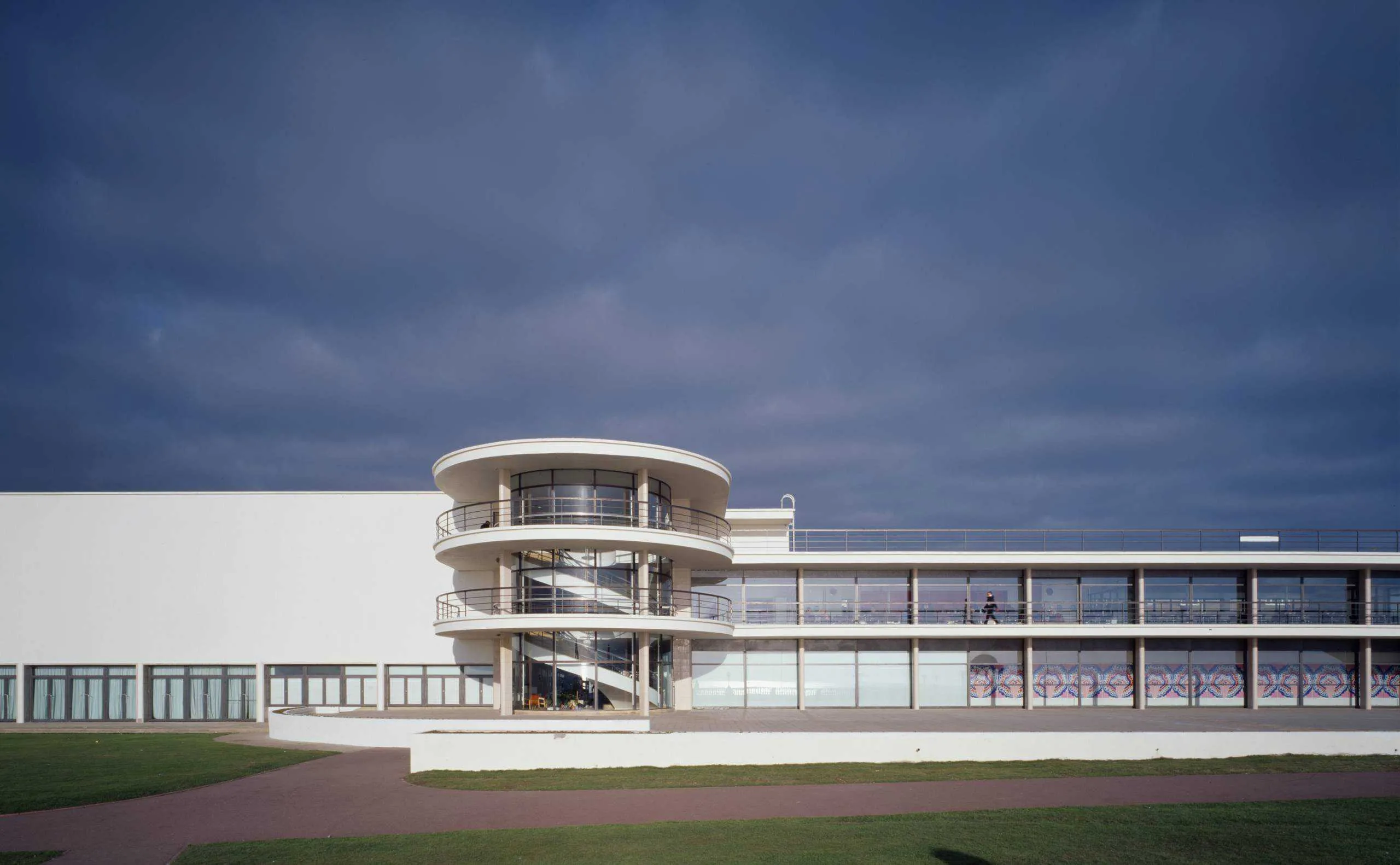
The De La Warr Pavilion, after John McAslan's restoration, Bexhill-on-Sea, United Kingdom, 2006
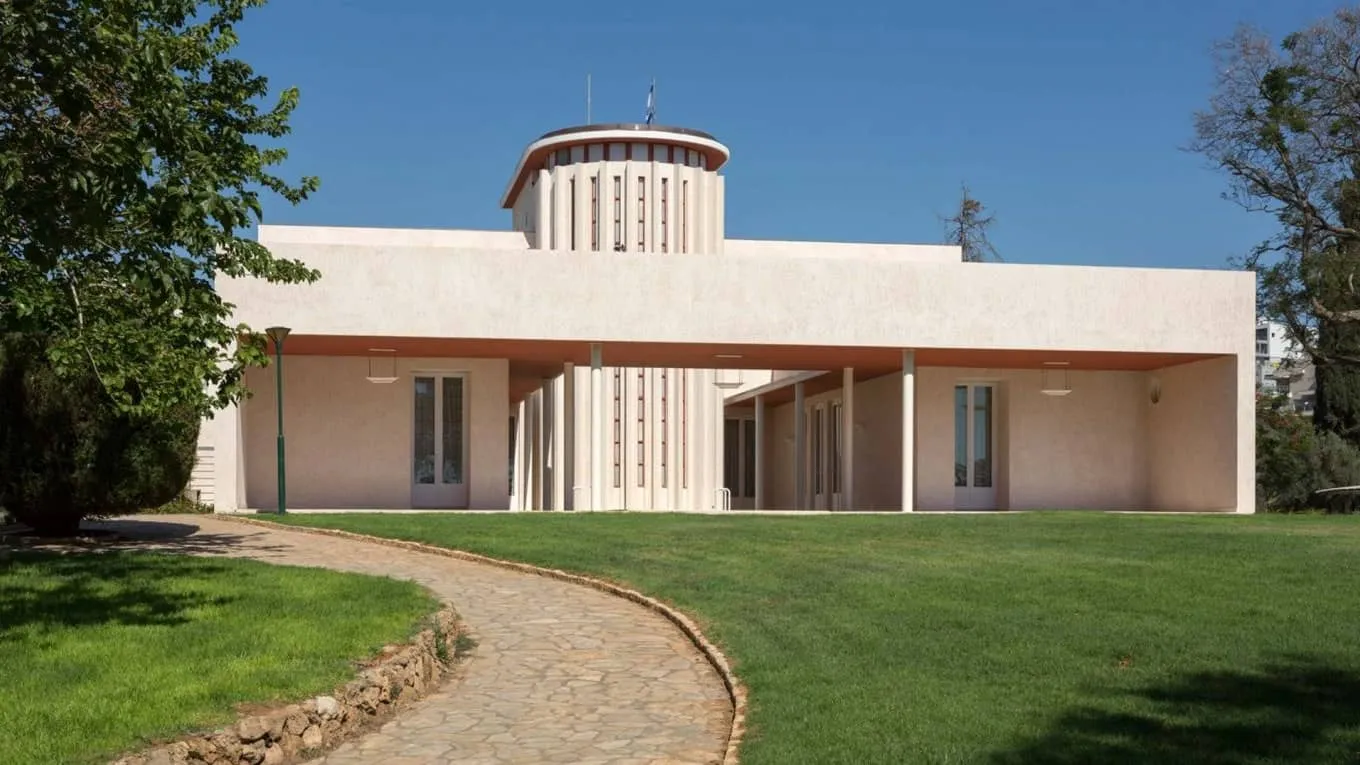
The Weizmann House, Rehovot, Israel
To fit two world wars into a single life, and to open and keep an architecture office in four countries, looks full of hardship even from today, when the speed of time makes one dizzy. Mendelsohn, who was in the United States during the Second World War, took the side opposite Germany, the country in whose name he had fought at the front in the First World War, out of nationalist feeling. He advised the American government, and he supplied information that could support the bombing of settlements. Until the end of his life he worked in America, mostly for the Jewish community.
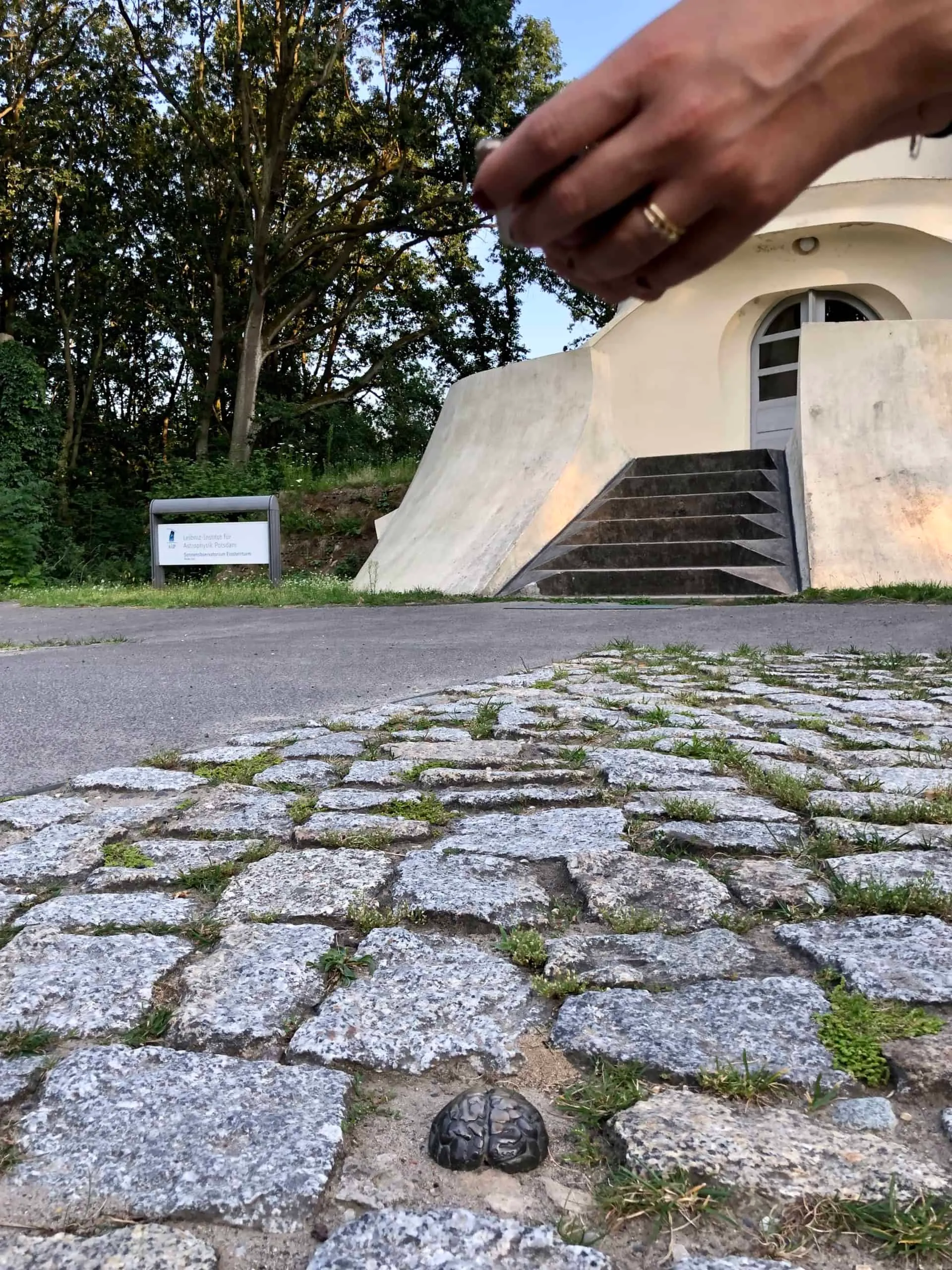
I think it is possible to read the career of the young Mendelsohn, who with the building he designed reached a summit fitted to the spirit of the age, together with the Einstein Tower, which has come down to us by surviving a thousand ordeals. The bronze sculpture of a human brain, set just in front of the Tower and only big enough to sit in a palm, is to my mind a very important symbol, joining the Einstein Tower, Mendelsohn, and me, trying, while I raised my child in the pandemic, to imagine the state I was in that day, at the moment I met the tower. Designed by the Berlin artist Volker März, "3 SEC Bronze Brain: Warning to the Now, Monument to the Continuous Now" refers to the work of the German neuroscientist Ernst Pöppel. Pöppel argues that the experience of continuity in time rests on an illusion, explained as the rebuilding of distinct intervals of consciousness, each of three seconds.
Who knows. These last lines, in which I feel that the two ends of a vast ring have at last met, may themselves be only one face of that illusion of "continuity".
This text was published in issue 69 (July 2021) of Betonart, the magazine of culture, art and architecture that appears every three months, each time on a different theme, in the issue prepared specially for the Einstein Tower designed by Erich Mendelsohn.