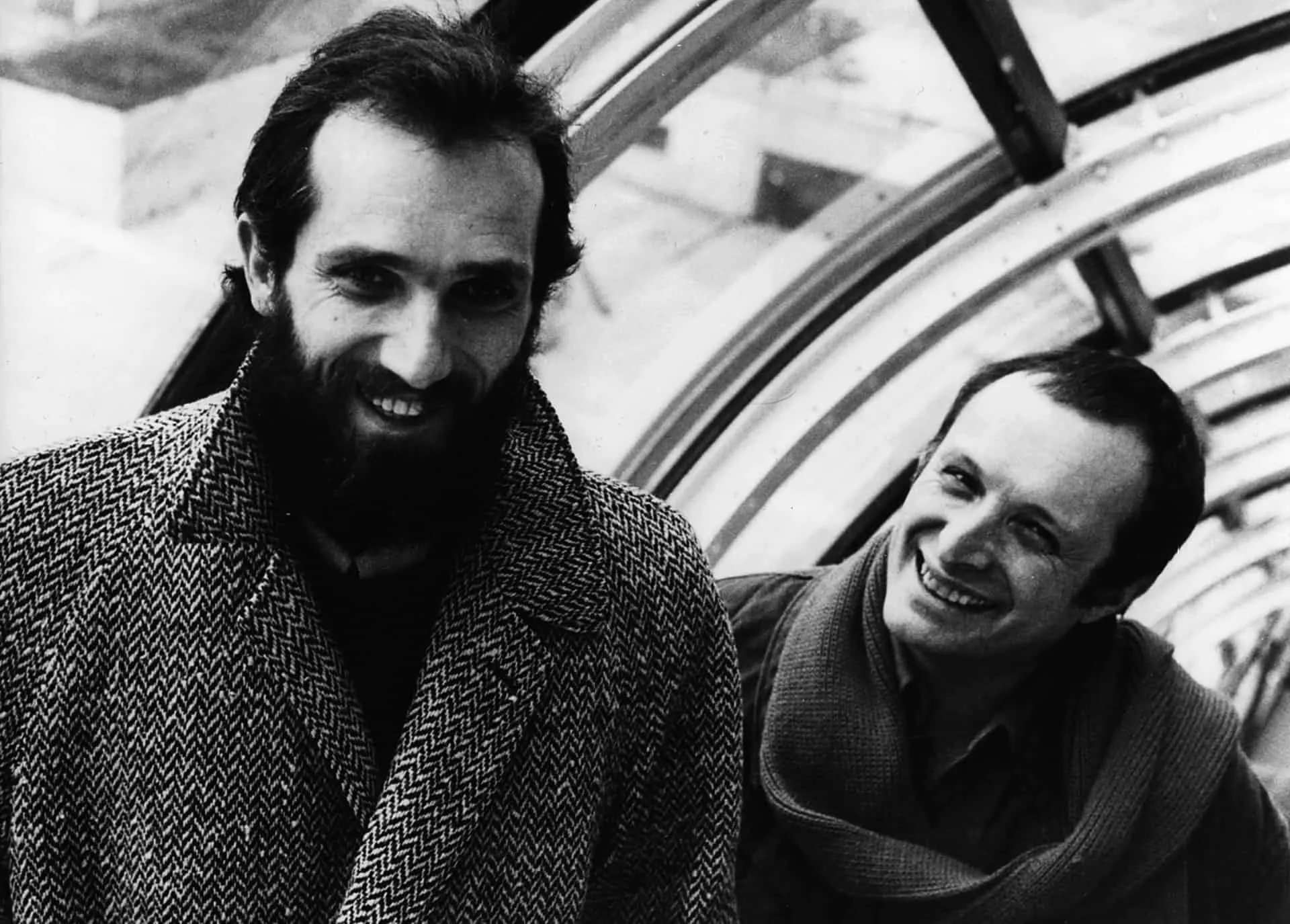
The world of architecture has lost Richard Rogers, one of its important icons.
Born in Italy, of English roots, Rogers had a wretched time at school, because he suffered from dyslexia, which in those years had not yet been given a name. His sparkle was noticed only just before he graduated from the Architectural Association. To my eye he was an architectural figure of exactly the right measure: rougher, and more real, than Norman Foster, the razor-sharp Englishman, his friend and his first partner since the years they took their master's together at Yale University, and less of a craftsman than Renzo Piano, his co-designer on the Pompidou, a building that stands for the end of an era.
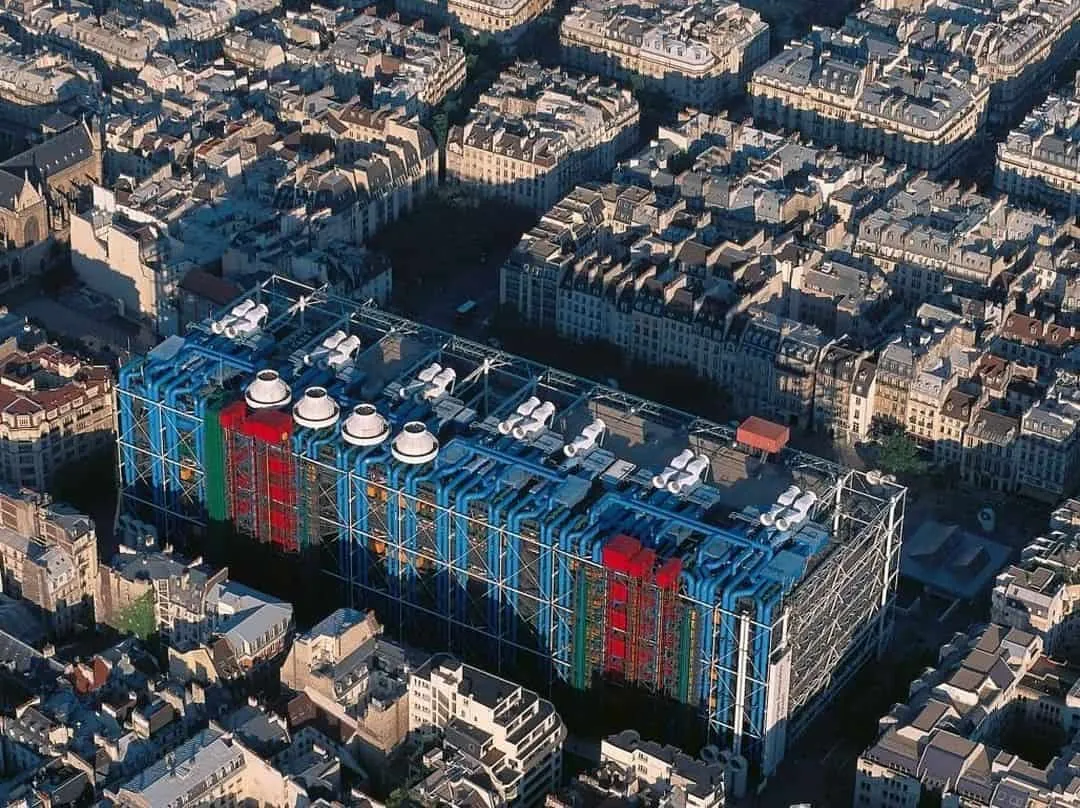
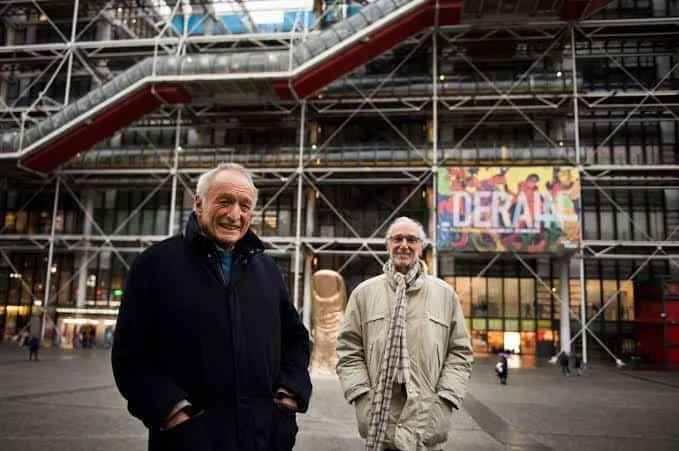
All through his life Richard Rogers signed a great many courageous buildings, with a great many talented partners. But the uncompromising Pompidou, which melts in one vessel the English spirit of the 1950s, the richness of the Italian cities, and America's light, freedom-loving way, is still among the buildings that have moved me most.
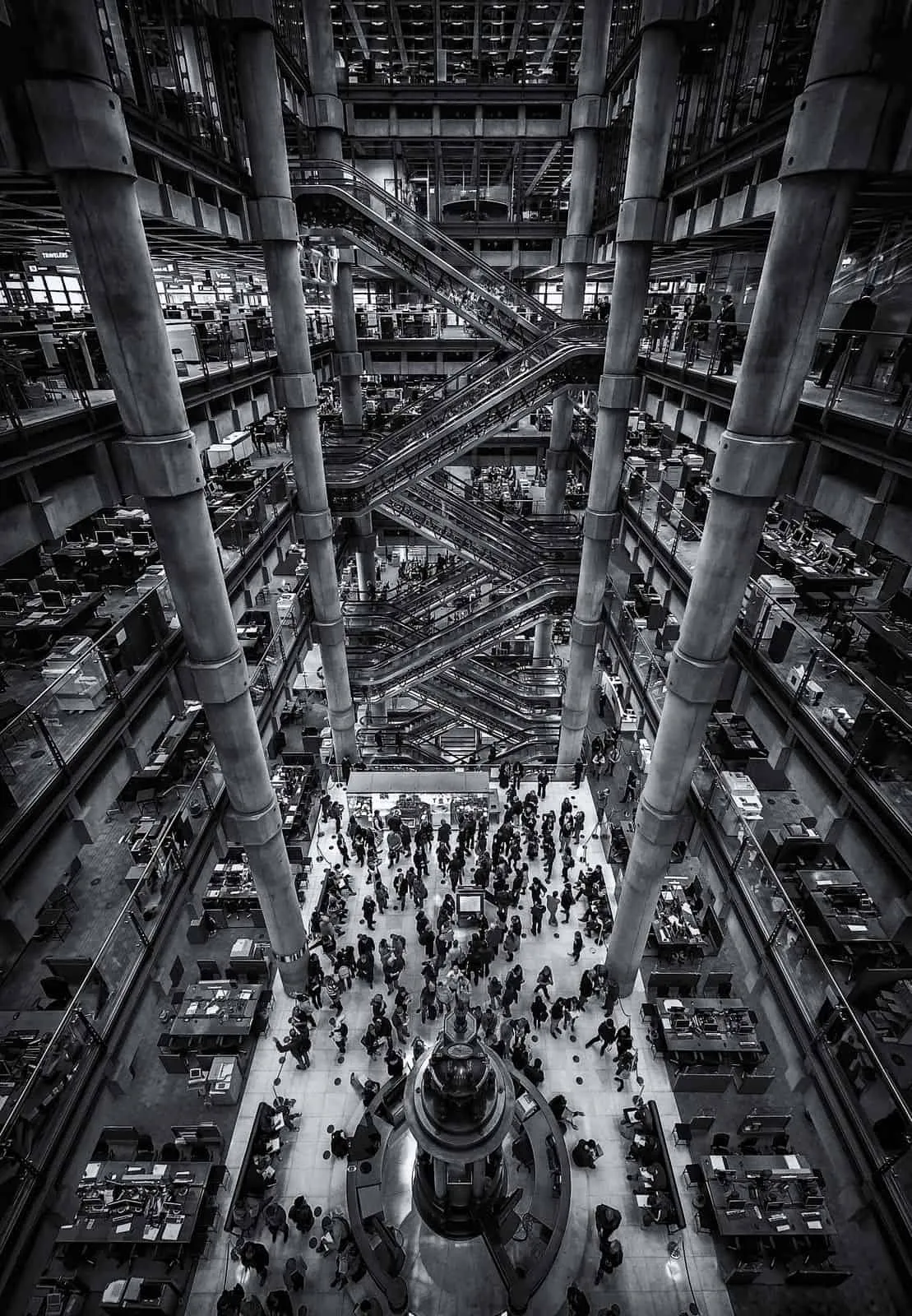
It is hard to count, in one breath, the iconic buildings Rogers signed in his long career, but when I close my eyes the first to come are Terminal 4 at Madrid Barajas Airport, Terminal 5 at Heathrow Airport, and the O2 Arena in London. Lloyd's, though, the hallmark of Hi-Tech architecture, taken up after the Pompidou in a similar spirit, has a place apart. If I had to choose a single frame in which the neoliberal economy is to be represented in architecture, I would probably choose the photograph of people rushing like bees in Lloyd's atrium, 60 metres high. It looks like a temple not of labour and of making, but of money and of power: of values that grow by being written from the right-hand column into the left. And of course, like most devilish things, it is very beautiful, and very seductive.
In the last years of his career Rogers signed the Hyde Park One blocks, which have come to look like the hallmark of Qatari capital, while saying that he always felt himself an old-guard leftist. It would not be wrong to say that he had seen a good deal of the advantages of global capitalism. Where architecture is concerned, however far to the left the heart beats, it is apparently not easy to keep one's distance from capital, or to hold, in that sense, a consistency that would last a life.
It is said that Richard Rogers's greatest success, besides being a polite gentleman, one of the last of his kind, and a very talented architect, was that he always gathered a talented crowd around him. Along with every prestigious architecture prize one knows, the RIBA and the Pritzker among them, Rogers held royal titles as well. I will remember him at the Venice Architecture Biennale, smiling at the entrance of the Italian pavilion in neon-coloured clothes, paying no mind to his advancing age.
He looked pleased with himself, and calm, and still very ambitious about architecture.
May the same fall to everyone who chooses to grow old as an architect...
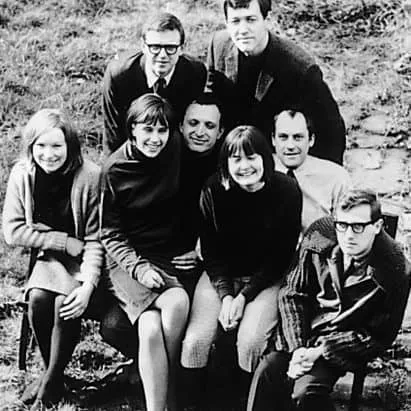
Team 4 and the Invisible Heroes
One cannot speak of Richard Rogers and pass Team 4 by. The practice founded in 1963 by Su Brumwell, Wendy Cheesman, Norman Foster and Richard Rogers, Team 4, became the architecture world's Fleetwood Mac with the look of ABBA.
Of the partners, Su and Richard married first, and then Norman and Wendy (who had flirted with Rogers before). As every mortal who has tasted marriage will guess, this partnership, whose balances would plainly be very hard to keep, did not last. After four years the couples divided into two offices, Richard&Su Rogers Architects and Foster Associates. In that short time Team 4 gave important buildings to the world of architecture.
Creek Vean House, which Su's family commissioned from Team 4 by selling a Mondrian painting, was the first house found worthy of a RIBA award. The client, Marcus Brumwell, ran an important advertising agency, and he was the founder of the Design Research Unit.
The Jaffe House is another work of that partnership: the house we see in A Clockwork Orange as the place where the self-realised artist couple are attacked, and which afterwards also shows how impossible it is for a paralysed person to live inside a fluid modernist space. Rogers and Foster later set sail for much larger commissions, and became knights, Sirs, Lords. Their partners (their wives), Su Brumwell and Wendy Cheesman, went on as respected architects who did not reach an international name. Wendy Cheesman died very young in 1989, while she was a partner and a director of Foster Associates. Su Brumwell continued the practice with Richard Rogers. Early in the 1970s Renzo Piano joined them, and together, under the name Piano + Rogers, they designed the Pompidou.
When the marriage ended, Su left the partnership, and carried to the Royal College of Art the teaching she had begun at the Architectural Association. She had been on the competition team for the Pompidou, and she was not named among its authors. In a pattern that is not strange to us at all, she left the company she was a partner in, and became part of the academy, which can be counted a little safer, and which society has always thought very becoming in a woman.
She married the architect John Miller in 1986, joined his office, and went on signing important buildings. The bright days of the 1960s, it seems, were stingy about letting the light fall on women, in England as in Türkiye. When Wendy Cheesman died there was no #MeToo movement, but I am hopeful, because it reached Su Brumwell while she was alive. I do not suppose she will be given the title of lady, or of duchess. Even so, I wanted to remember these two women, at the cost of stealing the scene from Rogers.