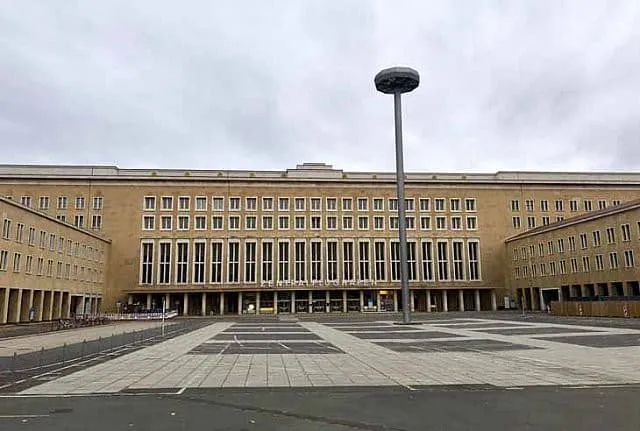
Since my younger sister moved to Berlin four years ago, this city I visit so often has become something of a second home. If I had to choose one word to describe it, that word would be “freedom”. But after spending time here, working my way through its tourist attractions and slipping into everyday life, I began to discover the city’s less visible layers: the ghosts of its recent past, and the profound reckoning behind that sense of freedom.
Berlin is a capital that emerged defeated from two world wars, was almost entirely destroyed in 1945 and divided through its very heart, then rebuilt once again after the Wall came down in 1989. A city that has served as the stage for grand visions throughout its history, it remains tired at heart, for all its makeovers. Germany’s role in the Second World War has undeniably shaped the world we live in today. From what I can tell, that legacy has complicated repercussions for Berlin’s younger generation. I sense that many carry a feeling of guilt about the part their grandparents played in the war, knowingly or otherwise. Outside the right-wing movement, whose support hovers around 12 per cent across Germany, people seem wary of nationalist rhetoric and to reject outright the idea of taking pride in belonging to a nation. Perhaps this, too, helps sustain Berlin’s multinational culture.
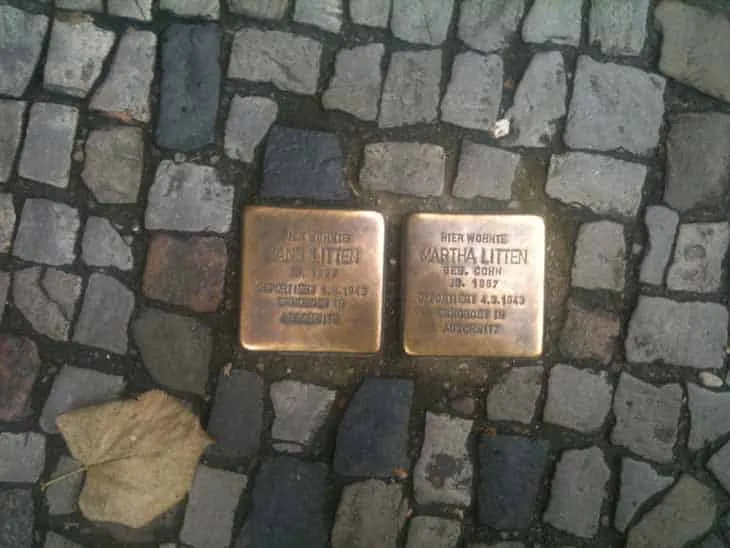
Yet the effects of what happened run far deeper than a few lines can convey. They have seeped into the streets, the trees, the houses, into everyday life, and so into the built environment and architecture. Urban and cultural life has been rebuilt around confronting the past, seeking absolution, and learning and teaching history, with all its cruelty and pain, over and over again. You can read this in the names of people deported to concentration camps, inscribed on paving stones outside their homes; in museums and monuments; and in individual buildings across the city.
Twenty-nine years have passed since the fall of the Berlin Wall. Germany has all but rebuilt its capital, on a scale without parallel in Europe. There was the valuable land left behind by the Wall to find a use for, and two halves of a city, built under entirely different ideologies, to bring together. There was also the ambition to position Berlin as the capital not only of Germany but of the European Union. Throughout the 2000s, the city was something of a laboratory, an enormous building site.
Berliners are, understandably, deeply sensitive to questions of urban memory and loss. Perhaps it is only natural, then, that such a mythology has grown around Tempelhof Airport, a witness to almost a century of the city’s history that no longer serves its original purpose. A few months ago, ten years after the airport’s closure, the terminal opened its doors to the public and drew enormous interest. Hundreds of people waited outside for hours, unable to get in because of safety restrictions and the sheer number of visitors. Tempelhof matters as much for its architecture as for its place in collective memory. Norman Foster has called it “the mother of all airports”. On a recent guided tour, I had a chance to see what lies behind its façade. The layers that help me make sense of Germany’s young, restless capital became clearer during that visit.
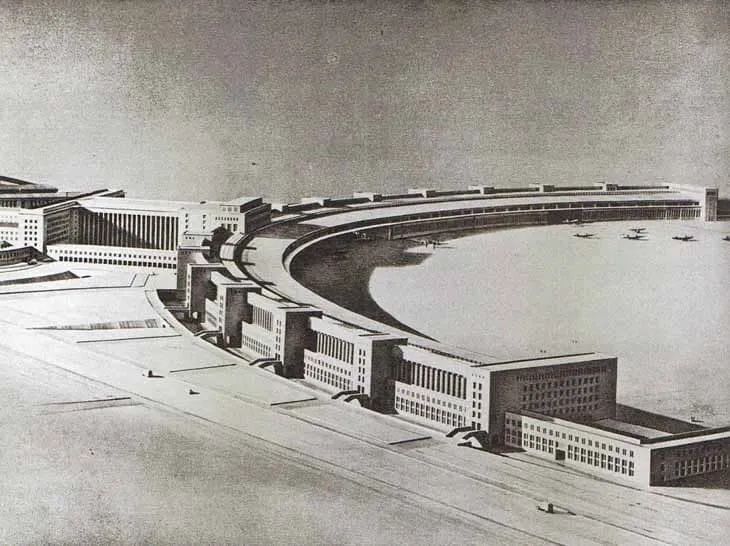
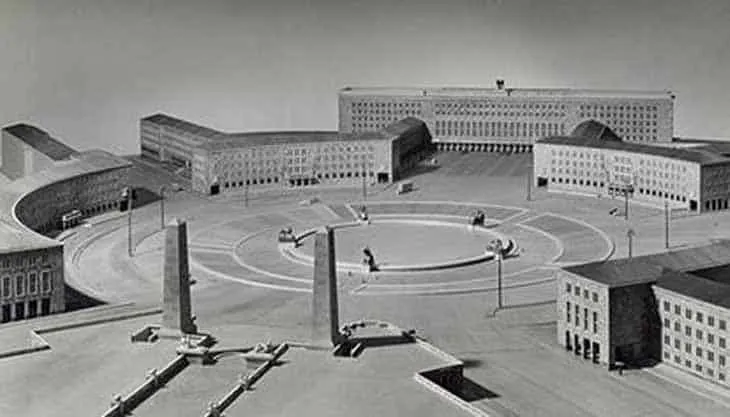
Tempelhof is one of the world’s oldest airports. An early centre of aviation where Orville Wright gave demonstration flights in the early twentieth century, it opened as an airport in 1923. The complex we see today was designed in the 1930s by Ernst Sagebiel (1892–1970). Construction was interrupted by the Second World War, and the scheme was never completed in full. It was intended as one of the great emblems of Germania, the new Berlin imagined by Hitler’s architect, Albert Speer. Inspired by an eagle with its wings spread, Tempelhof was to form part of the monumental setting of this projected world capital, Welthauptstadt Germania, framing the approach to its imposing Nazi ministry buildings. Göring’s prized Air Ministry, another Sagebiel building, still stands and now houses the Federal Ministry of Finance.
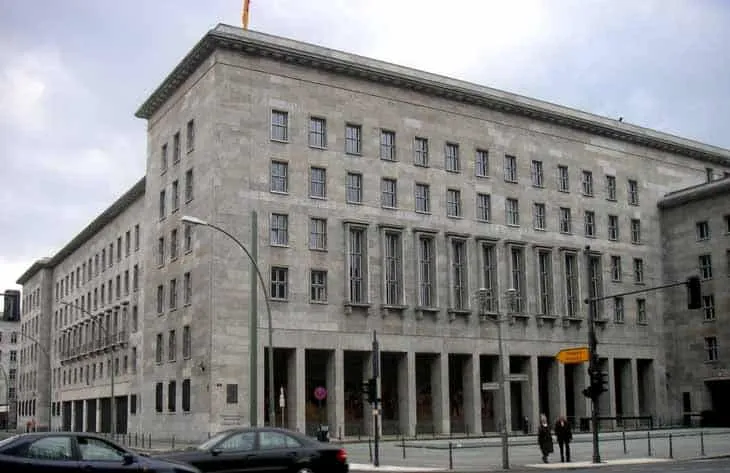
With 300,000 square metres of enclosed space and a monumental sweep of apron and hangar buildings extending for 1.2 kilometres, Tempelhof once ranked among the twenty largest buildings in the world. Grandstands for 80,000 spectators were planned above the apron. Today, only a few of the towers built to serve them remain. Simply imagining those stands filled to overflowing is enough to grasp the ideological burden a building can be made to carry.
Seeing this scale with my own eyes was a strange experience. It gave physical form to the Nazi regime’s deranged ambitions. Here, you feel German engineering in your bones. During the Second World War, parts of the complex were turned into a factory producing military aircraft with forced labour. The site also carries an earlier history of imprisonment: Columbiahaus, Berlin’s only official SS concentration camp, operated here from 1934 to 1936.
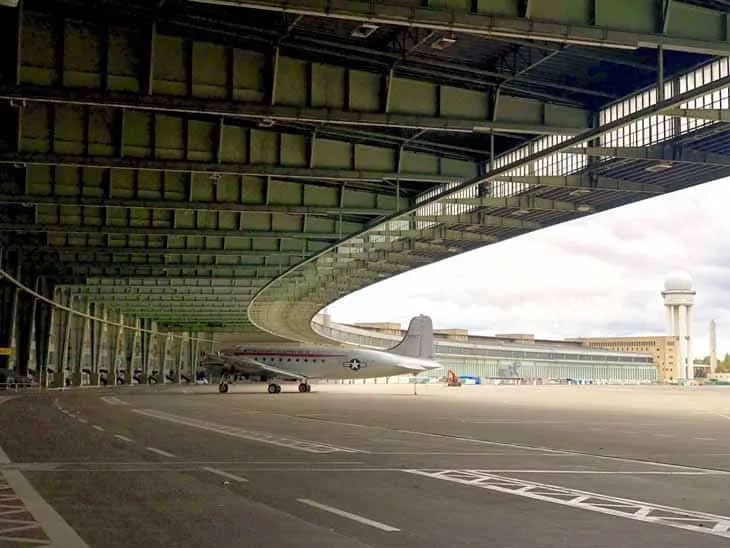
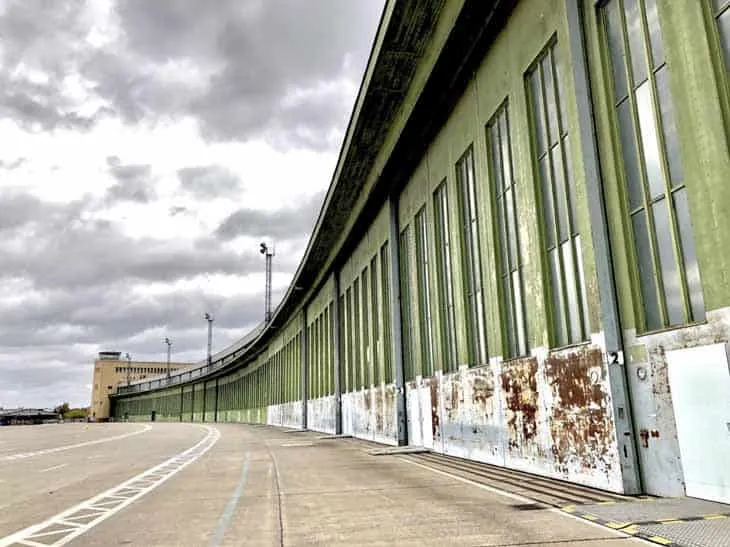
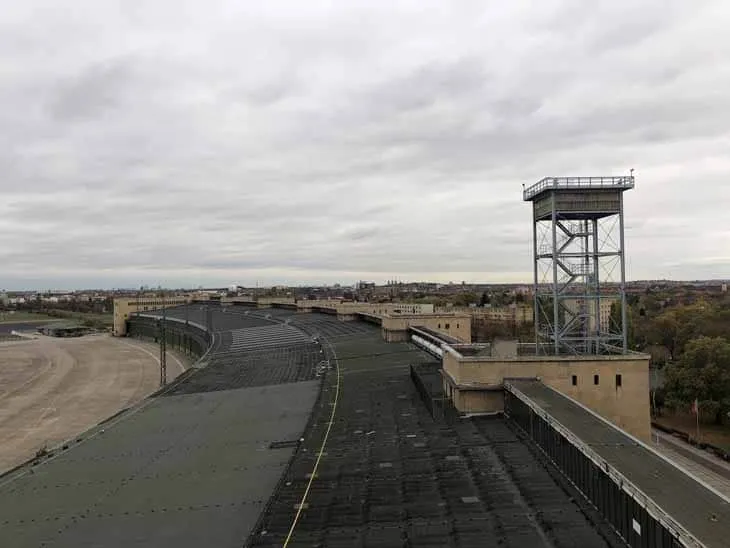
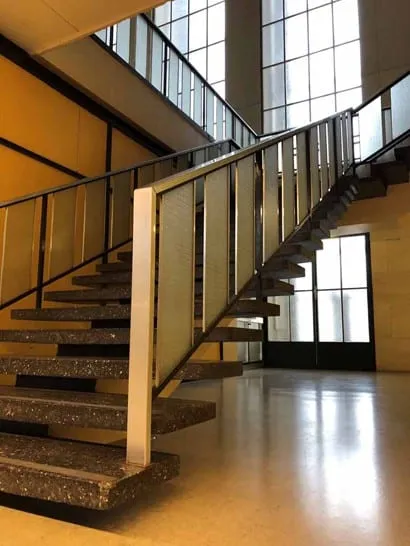
Ernst Sagebiel, the architect of both Tempelhof and the Air Ministry, had also spent time running Erich Mendelsohn’s office. Mendelsohn fled to Britain at the height of his career as the Nazis, newly in power, intensified their persecution of Jews. For all that Tempelhof’s scale and façade make it a typical example of German fascist architecture, the traces of the modernism that emerged in Germany in the 1920s, and that Mendelsohn helped shape, are visible in the main hall and the organisation of the terminal. If we regard the scale and façade, so eager to embody Nazi Germany’s ideals, as an outer shell, what lies beneath is a magnificent steel skeleton stripped of ornament and a rigorously functional plan. In that sense, it could be called the most modern and ambitious airport of the 1930s.
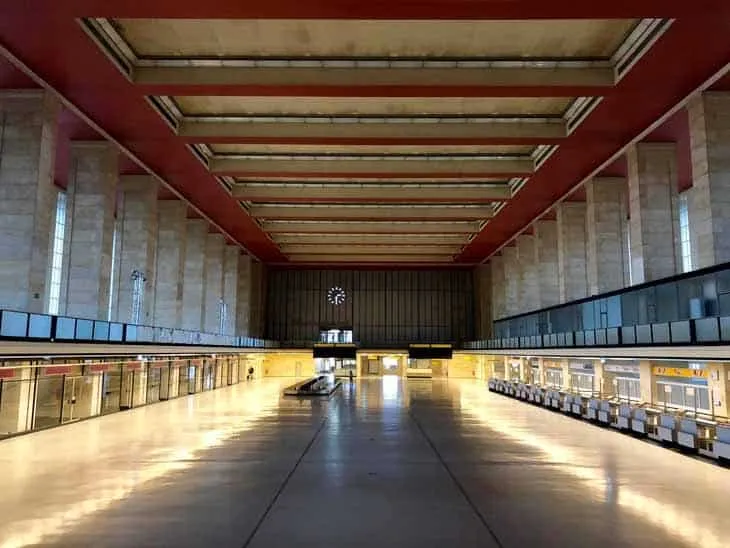
The main passenger hall, familiar from films, seems frozen in time. Its pleasing proportions feel particularly familiar to those of us from Turkey, where German architects designed so many buildings in the early years of the Republic. A restaurant on the mezzanine and a large clock placed asymmetrically beside it complete the composition of this galleried interior.
After the war, Tempelhof became a lifeline for Berliners, almost synonymous with freedom. During the Soviet blockade, it served as a base for the American aircraft bringing in the fuel and food that kept the city alive. One of the “Candy Bombers”, among the most enduring symbols of that time, is still displayed on the apron.
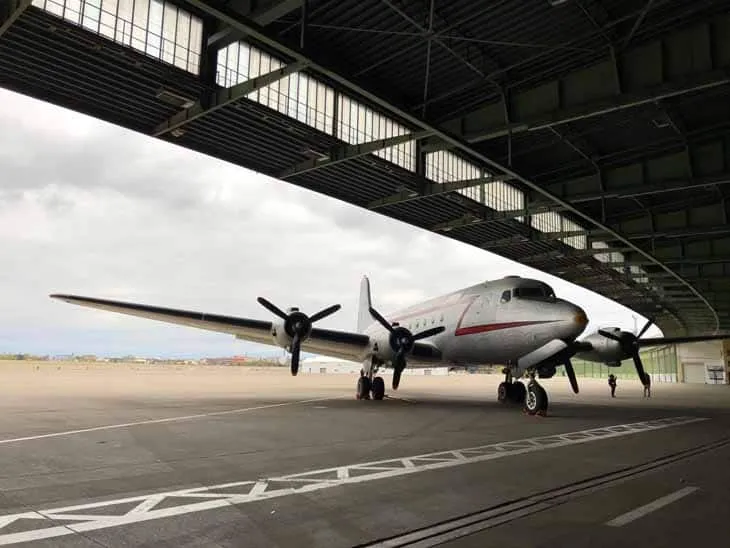
The Americans, no less adept at propaganda than the Nazis, found a way to win people’s affection and reassure children who had learned to fear the sound of aircraft. Small parachutes carrying sweets drifted down from their planes over Berlin. Around 23 tons of sweets were dropped over the course of the airlift. For Berliners of a certain age, those memories remain vivid. A German friend who joined us on the tour told us that her grandmother used to wait near Tempelhof to collect them. A mural inside the main terminal commemorates the city’s resistance, sustained by American support during the airlift of 1948–49.

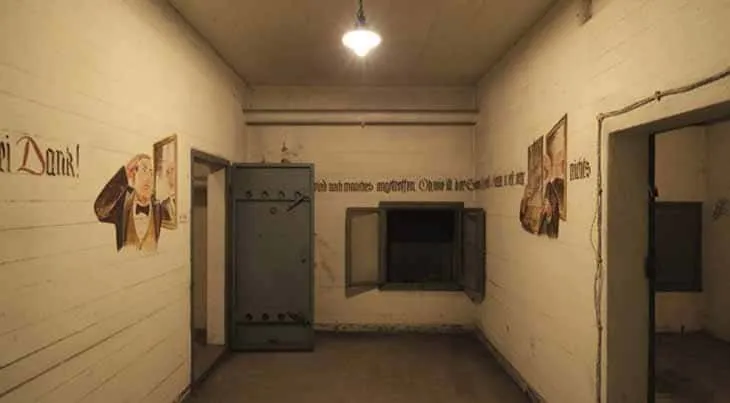
The shelters where people hid towards the end of the Second World War, sometimes for as long as four days, as bombing intensified and the threat of chemical attack loomed, have also survived. Pictures and slogans on the walls were meant to calm those inside. These airtight, bare concrete walls were built with a precision that, sadly, would put even Turkey’s luxury developments of 2018 to shame.
To understand the building’s layers more clearly, it helps to understand how Berlin’s airports were used after the war. Tegel, the city’s second airport, opened in 1948 to support the airlift that was keeping Berlin alive through Tempelhof. Until 1975, commercial flights operated from three airports: Tegel and Tempelhof in the West, and Schönefeld in the East. As aircraft grew larger and technology advanced, Pan Am and British Airways opted for Tegel, with its longer, safer and more suitable runways. Once commercial services transferred there, Tempelhof continued as an American military base. Civilian flights later returned, and domestic services resumed after the fall of the Wall. The airport closed for good in 2008, though it remains very much alive in the memories of Berliners now in their forties and older.
The alterations made after the Americans took over the airport in 1945 left their own traces. During the post-war works, the entrance hall’s ceiling, originally as high as that of the main passenger hall, was lowered by more than ten metres. Stone cladding was stripped from the upper walls and reused in repairs. You can still go up onto the floor inserted at this level and see what remains of the grand entrance that had been imagined.
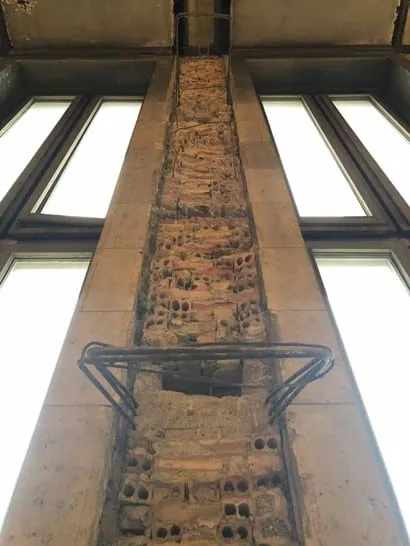
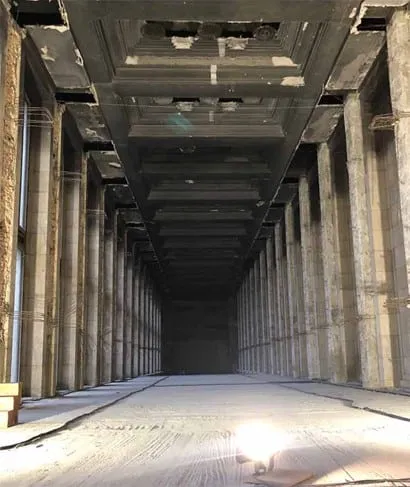
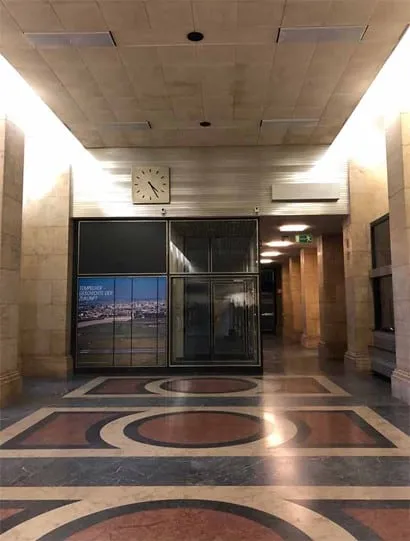
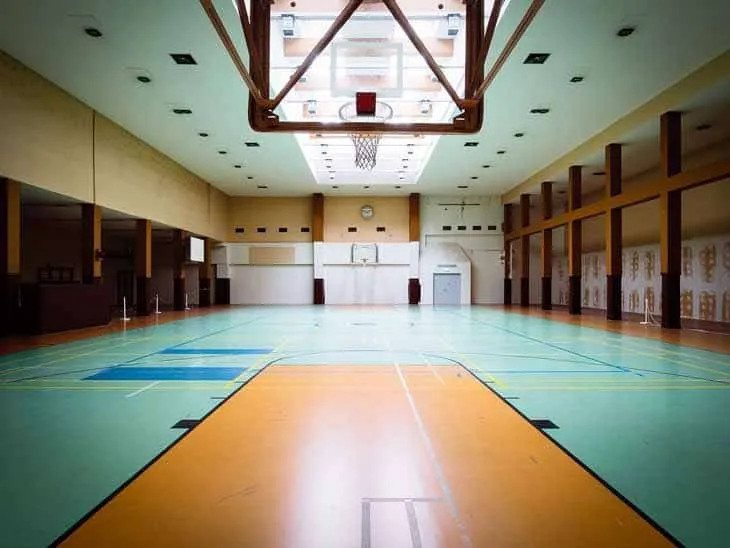
Some of the spaces used by the various American agencies, the CIA among them, during their decades at Tempelhof can still be seen, including a gym and a bowling alley.
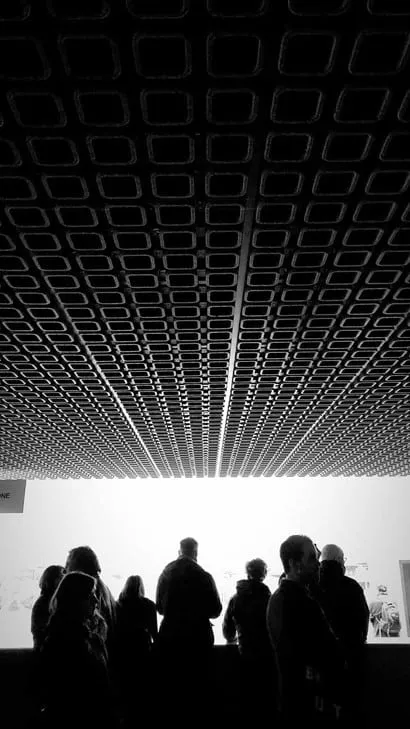
After numerous proposals for developing the airport grounds, a referendum settled their future: Berliners chose to preserve the site as a public park. Just a fifteen-minute bike ride from Tiergarten, Tempelhof is now a place to meet people cycling and skateboarding along the old runways, picnicking, or freely pursuing a thousand other activities you might never have thought of.
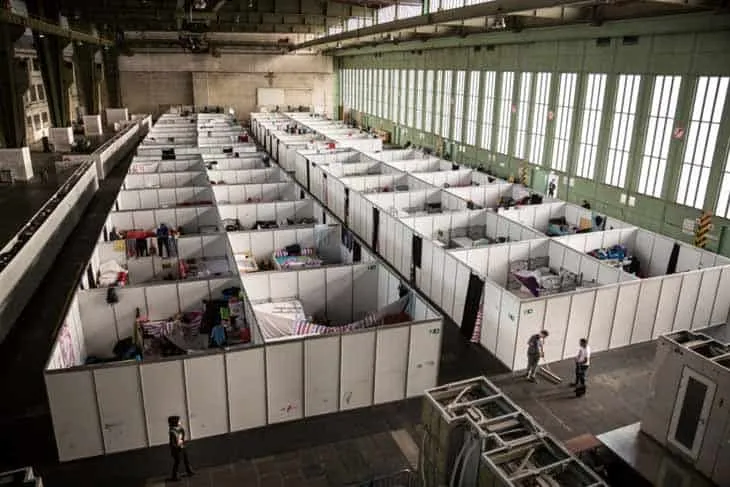
There is no question of Tempelhof’s architectural significance. Walking through it is a journey through time: the many eras of Berlin, that great, rebuilt European capital, coexist here. For Berliners, it is a symbol that lays bare the nation’s scars. With some parts recently used as temporary accommodation for refugees, Tempelhof stands in all its grandeur in the middle of the city: a monument to a kind of reckoning, questioning and rehabilitation we are unaccustomed to.
To visit Tempelhof is to feel the power of architecture, its capacity to destroy and to heal, all at once, and to witness almost every stage in the making of our present world order. For me, a mere mortal who has to bury another memory of my own past in the city every day, the visit is a breath of fresh air.
First published in Turkish on Arkitera, 12 November 2018.